

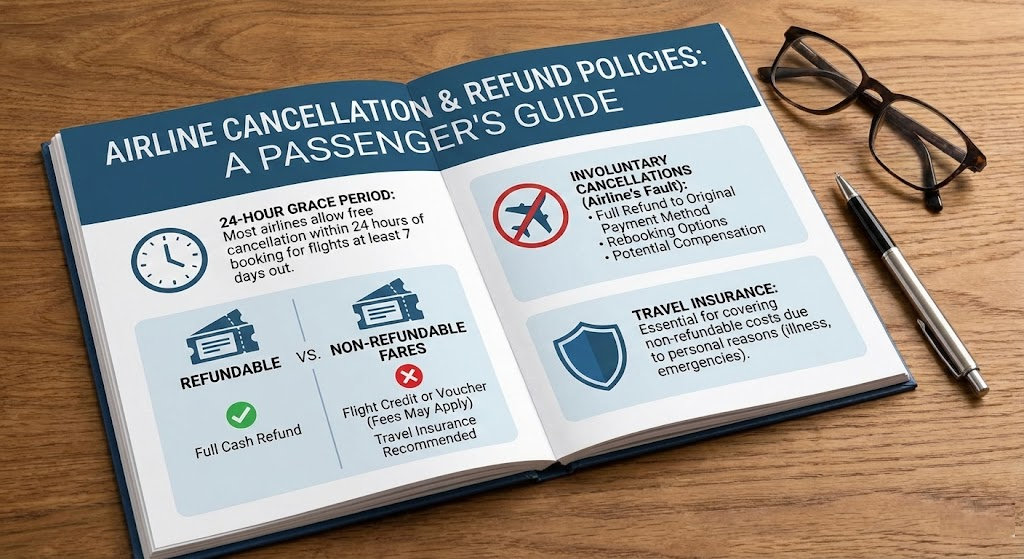
The world of airline cancellation policies resembles a complex dance—one where the music changes without warning and the steps are written in fine print. As of December 2025, understanding your rights when flights go awry has never been more important. Let’s unravel this web together.
The Bedrock of Your Rights: DOT Refund Rules
In October 2024, the Department of Transportation enacted game-changing regulations that finally brought clarity to the murky waters of flight disruptions. These rules mandate that any airline flying to, from, or within the United States must provide automatic refunds when your flight is canceled or significantly changed—for any reason.
What constitutes a “significant change”? The federal definition is specific and enforceable. If your flight schedule shifts dramatically and you refuse the new itinerary, reject rebooking options, and decline vouchers, you’re entitled to a cash refund to your original form of payment. This refund must include any unused portion of your ticket plus fees for services you didn’t receive—like that premium seat selection or pre-purchased Wi-Fi.
The Compensation Landscape
Here’s where things get interesting. While refunds for canceled flights are federally mandated, additional compensation for delays falls into murkier territory. A proposed rule that would have required airlines to pay passengers between $200 and $775 for disruptions within their control was officially scrapped by the Trump administration in November 2025.
This means American carriers aren’t legally required to offer cash compensation for controllable delays—a stark contrast to the robust protections enjoyed by travelers in Europe. However, most major airlines voluntarily provide some form of support: meal vouchers, hotel accommodations, or transportation when delays stretch into the night.
The Credit Conundrum
Perhaps the most bewildering aspect of airline policies lies in their handling of flight credits. If you cancel a nonrefundable ticket, airlines typically offer credit good for future travel—but beware the ticking clock. Some carriers begin the expiration countdown from the date you purchased the ticket, not when the credit was issued.
This peculiar practice means your credit might vanish before you’ve had a reasonable chance to use it. Air Canada defended this policy by stating, “Tickets are a contract that comes with obligations for both parties and as such they are finite.” A reminder that in the airline world, convenience rarely factors into policy decisions.
When Illness Strikes
The common belief that airlines will refund tickets when you fall ill before travel is, unfortunately, more myth than reality. While some carriers might extend this courtesy, there’s no regulation requiring them to do so.This situation underscores the value of comprehensive travel insurance—the only true protection against unexpected health issues.
The Golden Rule of Air Travel
If there’s one cardinal rule to remember when navigating airline policies, it’s this: verbal promises hold little weight. The flight attendant or gate agent who assures you of compensation has likely not received authorization to make such guarantees.Always request written confirmation or, at minimum, detailed notes in your passenger record.
Your Advocate: The DOT Dashboard
The Department of Transportation maintains a consumer dashboard comparing what all US airlines offer to delayed passengers. This resource allows you to easily review and compare policies side-by-side, empowering you to know your rights before disruptions occur.
The wild landscape of airline policies may seem designed to confuse, but knowledge remains your strongest asset. By understanding your fundamental rights to refunds for canceled flights while recognizing the limitations of delay compensation, you’ll navigate the turbulence of travel disruptions with greater confidence—and perhaps a touch more patience.